
For decades, employee engagement has been measured through annual surveys, quarterly pulse checks, and satisfaction scores. Organizations have relied on these tools to understand employee sentiment, identify pain points, and shape workplace strategies. While surveys have served an important purpose, today’s dynamic workplace demands something far more responsive.
The modern workforce is evolving faster than traditional engagement methods can keep up with. Employees’ expectations shift in real time, work environments change overnight, and organizational priorities continuously adapt. Waiting months to understand how employees feel is no longer enough.
The future of employee engagement isn’t about asking more questions. It’s about building organizations that listen continuously, respond quickly, and create meaningful experiences every day.
Why Traditional Surveys Are Losing Their Impact
Employee surveys often provide a snapshot of a moment that has already passed. By the time results are analyzed, shared with leaders, and translated into action plans, employees may have already moved on—or worse, disengaged.
Several challenges make survey-only strategies increasingly ineffective:
- Survey fatigue leads to lower participation and less honest feedback.
- Employees become skeptical when feedback doesn’t result in visible action.
- Annual engagement scores fail to capture rapid shifts in morale or motivation.
- Quantitative metrics rarely explain the emotions behind employee experiences.
Engagement is not a yearly event. It is a living, evolving relationship between employees and their organization.
Engagement Is Becoming an Everyday Experience
The organizations leading the future of work recognize that engagement happens through daily interactions rather than periodic questionnaires.
Every conversation with a manager, every learning opportunity, every recognition received, and every decision about flexibility contributes to an employee’s level of engagement.
Instead of measuring engagement occasionally, companies are beginning to design workplaces where engagement is continuously nurtured.
This shift moves HR from measuring satisfaction to shaping employee experiences in real time.
AI Is Enabling Continuous Listening
Artificial intelligence is transforming how organizations understand employee sentiment.
Rather than relying solely on surveys, companies can now gather insights from multiple sources, including:
- Collaboration patterns
- Learning participation
- Recognition platforms
- Internal communication channels
- Manager feedback
- Employee service interactions
AI can identify trends, detect early signs of burnout, highlight declining team morale, and even predict potential attrition risks before they become visible through traditional surveys.
Importantly, organizations must implement these capabilities responsibly, ensuring transparency, privacy, and ethical use of employee data.
The goal is not surveillance—it’s proactive support.
Managers Will Become the Primary Drivers of Engagement
Research consistently shows that employees don’t leave companies—they often leave poor management experiences.
In the future, engagement will depend less on HR initiatives and more on how managers lead every day.
High-performing managers create engagement through:
- Frequent coaching conversations
- Timely recognition
- Clear communication
- Psychological safety
- Career development discussions
- Empathy during change
Technology can provide insights, but meaningful human conversations remain the strongest engagement tool available.
Organizations that invest in manager capability will see greater returns than those relying solely on engagement programs.
Personalization Will Replace One-Size-Fits-All Programs
Not every employee is motivated by the same factors.
A new graduate entering the workforce seeks different experiences than a senior leader or a working parent.
Future engagement strategies will increasingly personalize experiences based on:
- Career stage
- Learning preferences
- Work style
- Personal aspirations
- Well-being needs
- Recognition preferences
Just as customers expect personalized experiences from brands, employees increasingly expect personalized experiences from employers.
HR leaders who embrace personalization will create stronger emotional connections between employees and the organization.
From Measuring Engagement to Designing Experiences
The most progressive organizations are shifting their focus from collecting feedback to designing workplaces where positive experiences happen naturally.
This includes:
- Simplifying workplace processes
- Creating growth opportunities
- Supporting flexibility
- Encouraging collaboration
- Recognizing contributions frequently
- Empowering employees with autonomy
Every interaction becomes an opportunity to strengthen engagement.
Instead of asking employees whether they feel valued, organizations should consistently demonstrate that they are valued.
Building a Culture of Action
Listening without acting damages trust.
Employees are more likely to participate in feedback initiatives when they see visible outcomes.
The future belongs to organizations that:
- Share insights transparently
- Involve employees in solving challenges
- Act quickly on recurring concerns
- Measure the impact of improvements
- Continuously refine employee experiences
Engagement becomes a continuous improvement cycle rather than an annual HR exercise.
The CHRO’s New Role
The CHRO is no longer simply responsible for measuring engagement scores.
Today’s HR leaders must become architects of employee experience.
This means combining people analytics, technology, organizational culture, leadership development, and employee well-being into a unified engagement strategy.
Success will be measured not by survey participation rates but by stronger trust, higher productivity, greater innovation, improved retention, and a workforce that feels genuinely connected to the organization’s purpose.
Looking Ahead
Employee engagement is entering a new era.
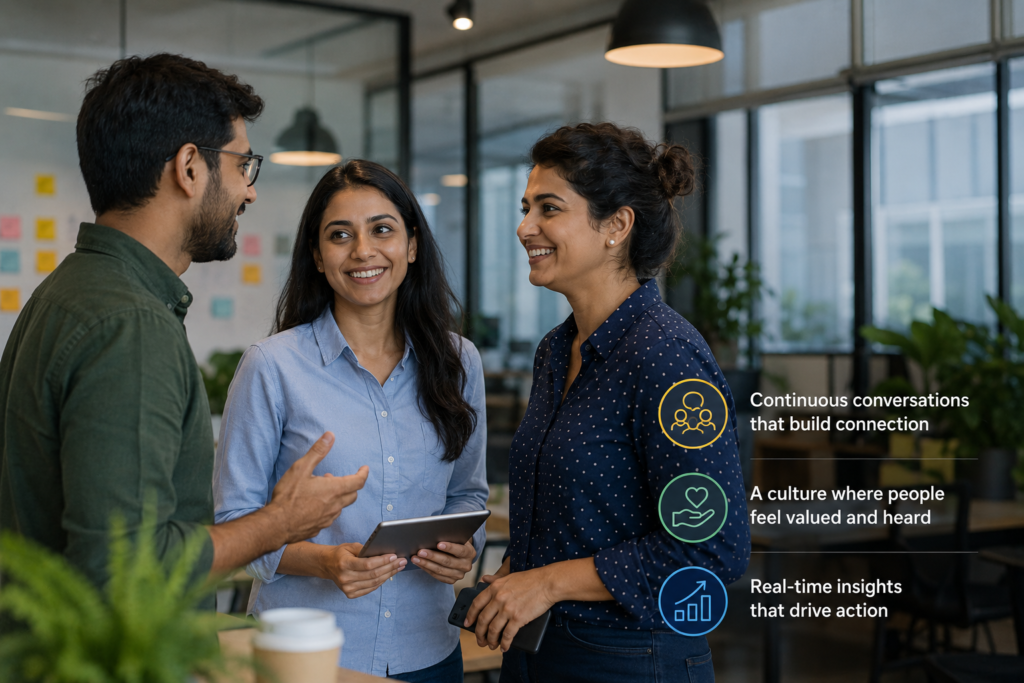
Surveys will continue to play a role, but they will become just one component of a much broader listening ecosystem. Organizations that combine continuous feedback, AI-powered insights, empathetic leadership, and personalized employee experiences will build workplaces where engagement is not measured occasionally—it is experienced every day.
The future of engagement belongs to organizations that move beyond asking employees how they feel and instead create environments where people consistently feel heard, valued, and inspired to do their best work.