
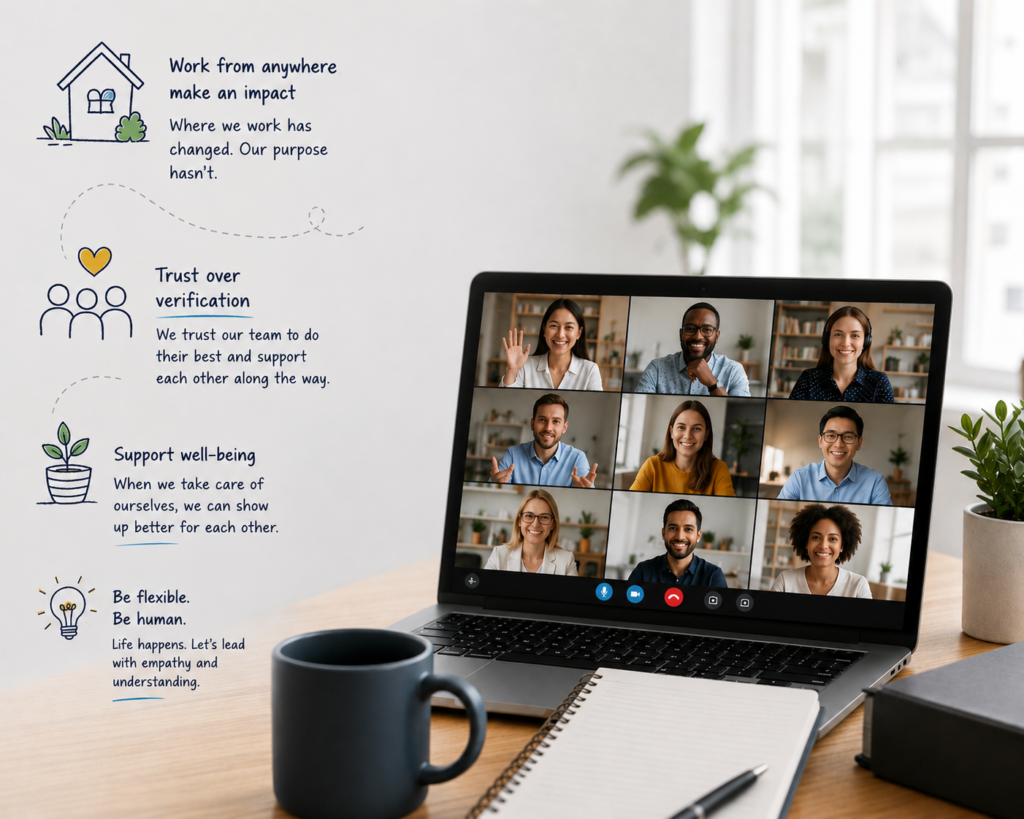

In today’s business landscape, leadership is no longer confined to boardrooms, corner offices, or face-to-face interactions. The rise of remote and hybrid work has fundamentally reshaped how organizations operate and, more importantly, how leaders connect with their teams. While remote work offers flexibility, wider talent access, and improved work-life balance, it also introduces one significant challenge: trust.
Trust has always been the foundation of effective leadership. But in a world where teams collaborate through screens, messages, and virtual meetings, building and sustaining trust requires a different approach. The leaders who succeed in this era are not those who simply manage people remotely; they are the ones who intentionally create environments where trust can thrive.
Why Trust Matters More Than Ever
Trust is often described as the invisible currency of leadership. When trust exists:
- Teams communicate openly
- Employees feel valued and engaged
- Decision-making becomes faster
- Collaboration improves
- Innovation increases
Without trust, remote teams can experience miscommunication, isolation, reduced productivity, and disengagement.
In traditional workplaces, trust often developed naturally through casual conversations, shared experiences, and physical presence. Remote leadership removes many of these spontaneous moments, making trust-building a deliberate responsibility rather than a passive outcome.
The Shift from Monitoring to Empowerment
One of the biggest mistakes leaders make in remote environments is equating visibility with productivity. Employees no longer need constant supervision to prove they are working.
High-performing remote leaders shift from:
“Are people online?”
to
“Are people delivering outcomes?”
Micromanagement creates anxiety and signals a lack of confidence. Trust, on the other hand, grows when leaders empower teams with ownership and autonomy.
Employees perform best when they feel:
- Trusted to manage their work
- Responsible for outcomes
- Supported rather than monitored
The most effective leaders focus on results rather than activity tracking.
Communication Becomes Leadership
In remote environments, communication is not just a management tool—it becomes leadership itself.
Leaders should focus on:
Consistency
Frequent communication reduces uncertainty. Team members should never feel disconnected from organizational priorities or decisions.
Transparency
Employees appreciate honesty, particularly during uncertain situations. Sharing challenges alongside successes builds credibility.
Clarity
Remote teams cannot rely on hallway discussions to fill information gaps. Clear expectations and well-defined goals become essential.
Strong communication builds predictability, and predictability builds trust.
Human Connection Cannot Be Automated
Technology enables remote work, but relationships still drive performance.
Remote leadership should go beyond project updates and status meetings. Leaders who invest in human connection create stronger, more loyal teams.
Simple actions make a meaningful difference:
- Scheduling informal virtual conversations
- Recognizing personal milestones
- Checking on employee well-being
- Encouraging open dialogue
- Creating spaces for team interaction
Employees want to feel seen as individuals, not just contributors to deliverables.
Psychological Safety Drives Trust
Trust does not simply mean believing people will complete their work. It also means creating an environment where employees feel safe to express ideas, ask questions, and discuss challenges.
Teams with psychological safety tend to:
- Share ideas freely
- Take calculated risks
- Learn from mistakes
- Collaborate effectively
- Adapt quickly to change
Leaders can strengthen psychological safety by listening actively, welcoming feedback, and responding with curiosity rather than judgment.
Leading with Empathy in a Distributed World
Remote work has blurred the lines between personal and professional life. Team members may be managing family responsibilities, time-zone differences, and personal pressures while meeting professional expectations.
Empathetic leadership does not reduce accountability; it improves understanding.
Leaders who demonstrate empathy:
- Build stronger relationships
- Increase employee engagement
- Improve retention
- Strengthen loyalty
Employees are more likely to trust leaders who acknowledge challenges while supporting growth.
The Future of Leadership Is Trust-Centered
As organizations continue embracing remote and hybrid models, leadership success will increasingly depend on one critical capability: the ability to build trust without physical presence.
The future leader will not be defined by control, hierarchy, or visibility. They will be defined by transparency, empathy, communication, and empowerment.
Technology may continue to change where people work, but trust will continue to determine how effectively they work together.
Because in an era of remote leadership, trust is no longer just a leadership quality—it is the foundation of organizational success.