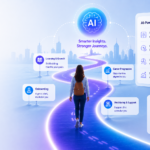


For years, organizations have measured employee success through a single lens: retention. The goal was simple—reduce attrition, increase tenure, and keep top talent from leaving. While retention remains important, today’s workforce expects much more than a reason to stay. Employees want compelling reasons to grow, contribute, and build meaningful careers within an organization.
In a rapidly evolving workplace shaped by technological disruption, changing employee expectations, and increasing competition for talent, organizations must move beyond retention-focused strategies and embrace employee growth as a core business priority.
The question is no longer, “How do we stop employees from leaving?” It is, “How do we create an environment where employees genuinely want to stay and thrive?”
Why Retention Alone Is No Longer Enough
Traditional retention strategies often focus on compensation, benefits, and employee engagement initiatives. While these factors remain important, they rarely address the deeper motivations that influence career decisions.
Employees today seek:
- Continuous learning opportunities
- Meaningful work and purpose
- Career mobility and advancement
- Flexibility and autonomy
- Recognition and belonging
- Personal and professional growth
Research consistently shows that employees are more likely to remain with organizations that invest in their development and provide clear pathways for growth. Retention becomes a natural outcome when employees feel they are progressing rather than standing still.
The Shift from Employee Loyalty to Employee Experience
The concept of loyalty has evolved significantly. Earlier generations often spent decades with a single employer. Today’s workforce views careers as dynamic journeys rather than linear paths.
Employees evaluate organizations based on the quality of their experience, including:
- Access to development opportunities
- Leadership support
- Workplace culture
- Internal career options
- Well-being and work-life integration
Organizations that prioritize employee experience create stronger emotional connections, leading to higher engagement, productivity, and long-term commitment.
Building a Growth-Centered Workplace
1. Create Visible Career Pathways
One of the biggest reasons employees leave is uncertainty about their future.
Organizations should provide:
- Clear career frameworks
- Internal mobility programs
- Skill-based progression paths
- Transparent promotion criteria
When employees can visualize their future within the organization, they are more likely to invest their energy and commitment.
2. Make Learning a Daily Habit
Learning can no longer be limited to annual training calendars.
Forward-thinking organizations are embedding learning into the flow of work through:
- Microlearning platforms
- AI-powered learning recommendations
- Mentorship programs
- Stretch assignments
- Cross-functional projects
Employees who continuously learn are better prepared for future roles and more engaged in their current ones.
3. Focus on Skills Rather Than Job Titles
The rise of skills-based organizations is changing talent management strategies.
Instead of hiring, promoting, and developing employees solely based on job titles, companies are increasingly focusing on:
- Skill development
- Skill visibility
- Skill mobility
This approach opens new career opportunities and allows employees to grow across functions, departments, and business units.
Empower Managers to Become Career Coaches
Managers have a significant influence on employee retention and growth.
Unfortunately, many managers are trained to oversee performance but not career development.
Organizations should equip leaders to:
- Conduct meaningful career conversations
- Identify employee aspirations
- Recommend growth opportunities
- Provide continuous feedback
When managers actively support development, employees feel valued and see a future within the organization.
Foster a Culture of Internal Mobility
Many organizations lose talent simply because employees find growth opportunities elsewhere before discovering them internally.
A strong internal talent marketplace helps employees:
- Explore new roles
- Participate in temporary projects
- Join cross-functional teams
- Develop new skills
Internal mobility not only improves retention but also strengthens organizational agility and workforce resilience.
Prioritize Purpose and Meaning
Compensation may attract talent, but purpose often keeps them engaged.
Employees increasingly want to understand:
- How their work contributes to organizational goals
- The impact they create for customers and society
- The values their organization stands for
Organizations that communicate a clear mission and connect individual contributions to larger outcomes create stronger employee commitment.
Recognize Growth, Not Just Performance
Recognition programs often focus solely on outcomes and achievements.
However, organizations should also celebrate:
- Learning milestones
- Skill acquisition
- Innovation efforts
- Collaboration
- Personal development
Recognizing growth reinforces a culture of continuous improvement and encourages employees to invest in their future.
Leverage AI to Personalize Employee Growth
Artificial intelligence is transforming how organizations support employee development.
AI-powered talent platforms can help:
- Identify skill gaps
- Recommend learning opportunities
- Match employees with mentors
- Suggest internal career moves
- Personalize development plans
By creating tailored growth experiences, organizations can better align employee aspirations with business needs.
The Future Belongs to Growth-Focused Organizations
The most successful organizations of the future will not be those that simply retain employees. They will be the ones that continuously create opportunities for employees to learn, evolve, and advance.
Retention is ultimately a result—not a strategy.
When employees feel challenged, supported, recognized, and empowered to grow, they are far more likely to stay. More importantly, they become stronger contributors, future leaders, and advocates for the organization.
As the war for talent intensifies, the organizations that win will be those that move beyond retention metrics and focus on building workplaces where people can build meaningful careers.