
For years, organizations have focused on delivering personalized experiences to customers. Today, the same expectation is rapidly transforming the workplace. Employees no longer want generic career paths, standardized learning programs, or one-size-fits-all engagement initiatives. They expect experiences tailored to their skills, aspirations, work styles, and personal goals.
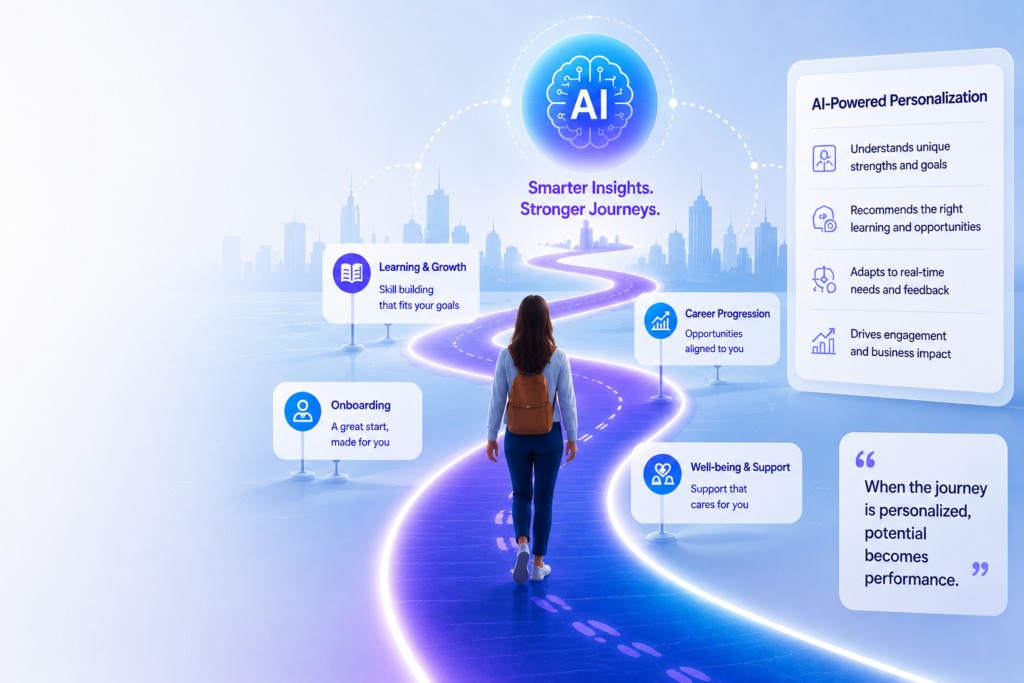
Artificial Intelligence (AI) is making this possible by enabling organizations to create highly personalized employee journeys across every stage of the employee lifecycle—from recruitment and onboarding to development, performance management, and retention.
As talent becomes the most critical differentiator for business success, CHROs are increasingly leveraging AI to build workplaces that understand, support, and grow with individual employees.
Why Personalization Matters More Than Ever
Today’s workforce is more diverse than ever before. Employees span multiple generations, work remotely or hybrid, possess different learning preferences, and have unique career ambitions.
Traditional HR practices often treat employees as groups rather than individuals. While this approach may be efficient, it frequently leads to disengagement, missed opportunities, and higher turnover.
Employees increasingly expect:
- Career development tailored to their strengths and aspirations
- Learning opportunities aligned with future goals
- Flexible work arrangements based on individual needs
- Relevant benefits and wellbeing support
- Meaningful feedback and recognition
Organizations that fail to meet these expectations risk losing top talent to competitors that offer more personalized experiences.
AI: The Engine Behind Personalized Employee Experiences
AI enables HR teams to move beyond assumptions and make data-driven decisions that support individual employee needs.
By analyzing employee data, skills profiles, learning history, performance patterns, engagement levels, and career interests, AI can generate personalized recommendations and experiences at scale.
This allows organizations to provide individualized support to thousands of employees simultaneously—something that would be impossible through manual processes alone.
Personalized Recruitment and Hiring
The employee journey begins before an individual joins the organization.
AI-powered recruitment platforms can:
- Match candidates with roles that fit their skills and career goals
- Deliver personalized communication throughout the hiring process
- Recommend relevant opportunities within the organization
- Reduce hiring bias through objective skill-based assessments
Candidates experience a more engaging recruitment process while organizations improve hiring accuracy and candidate satisfaction.
Transforming Onboarding Experiences
The first few months of employment significantly influence long-term engagement and retention.
AI-driven onboarding systems can create customized onboarding plans based on:
- Role requirements
- Previous experience
- Learning preferences
- Career aspirations
New employees receive tailored training content, introductions to relevant colleagues, and personalized support resources, helping them become productive faster while feeling connected to the organization.
Personalized Learning and Career Development
One of AI’s most powerful applications lies in learning and development.
Traditional learning programs often offer the same courses to everyone, regardless of individual needs. AI changes this by recommending learning opportunities based on:
- Current skill gaps
- Career ambitions
- Emerging business needs
- Industry trends
Employees receive personalized learning paths that continuously evolve as their skills and goals change.
Additionally, AI-powered talent marketplaces can identify internal opportunities, stretch assignments, mentorship programs, and career moves that align with an employee’s unique profile.
This creates a culture of continuous growth while helping organizations retain valuable talent.
Reinventing Performance Management
Annual performance reviews are increasingly being replaced by continuous feedback systems.
AI helps managers and employees gain real-time insights into performance by:
- Tracking progress toward goals
- Identifying development opportunities
- Providing coaching recommendations
- Highlighting achievements and contributions
Employees receive more timely, relevant feedback, while managers gain better visibility into team performance and engagement.
The result is a more supportive and growth-oriented performance culture.
Enhancing Employee Wellbeing
Employee wellbeing has become a strategic priority for organizations worldwide.
AI can help personalize wellbeing initiatives by identifying patterns that may indicate:
- Burnout risks
- Workload imbalances
- Engagement challenges
- Stress-related concerns
Organizations can then provide targeted resources, support programs, and interventions before problems escalate.
This proactive approach strengthens employee resilience while demonstrating genuine organizational care.
AI-Powered Internal Mobility
Many employees leave organizations not because they want to leave, but because they cannot see a future within them.
AI-driven internal talent marketplaces address this challenge by matching employees with:
- Open positions
- Project opportunities
- Cross-functional assignments
- Mentorship relationships
By making career opportunities more visible and accessible, organizations improve retention while maximizing internal talent utilization.
Balancing Personalization with Trust
While AI offers tremendous opportunities, personalization must be implemented responsibly.
Employees need confidence that their data is being used ethically and transparently.
CHROs must establish clear governance around:
- Data privacy
- Algorithmic fairness
- Transparency in AI decision-making
- Human oversight
AI should augment human judgment, not replace it. The most successful organizations will combine technological intelligence with human empathy.
The Strategic Role of CHROs
The rise of AI-powered employee journeys represents more than a technology shift—it is a fundamental transformation in how organizations manage talent.
CHROs must lead this evolution by:
- Building responsible AI strategies
- Developing AI literacy across HR teams
- Ensuring ethical use of employee data
- Creating employee-centric experiences
- Measuring outcomes beyond efficiency alone
The goal is not simply automation but the creation of workplaces where every employee feels understood, valued, and empowered to succeed.
Looking Ahead
The future of work will be defined by personalization. Employees increasingly expect experiences that reflect their individual needs, ambitions, and potential.
AI provides the tools to deliver these experiences at scale, helping organizations create more engaging, productive, and inclusive workplaces.
As technology continues to evolve, the organizations that thrive will be those that use AI not just to optimize processes, but to humanize the employee experience.
The rise of personalized employee journeys is no longer a future trend—it is becoming a competitive necessity. For CHROs, the opportunity is clear: leverage AI to create workplaces where every employee’s journey is unique, meaningful, and aligned with both personal and organizational success.