
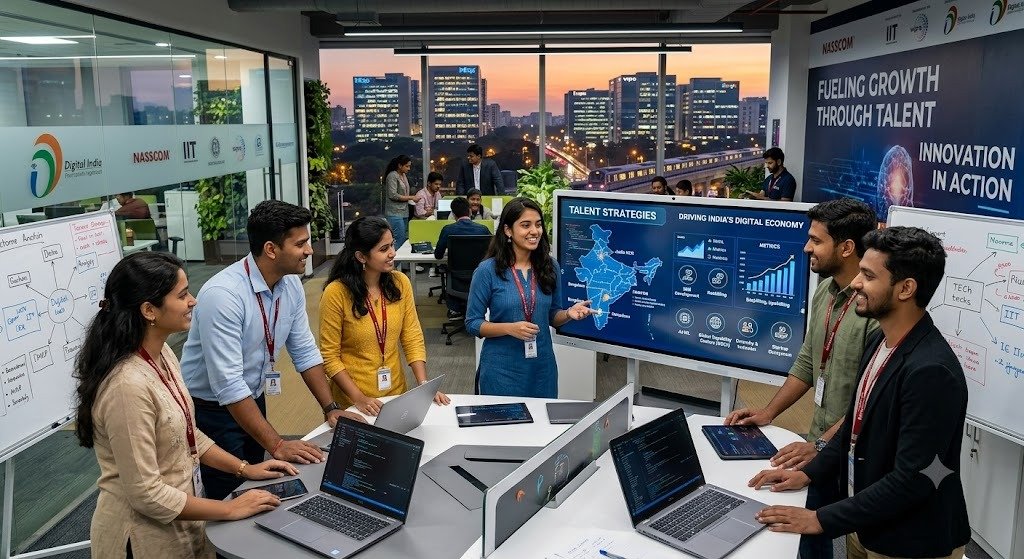

India’s digital economy is no longer an emerging opportunity—it has become one of the country’s strongest engines of growth. From fintech and e-commerce to artificial intelligence, manufacturing, healthcare, and SaaS, digital transformation is reshaping every industry. Government initiatives, widespread internet adoption, digital payments, and increasing technology investments have accelerated this transformation, creating an unprecedented demand for skilled talent.
However, technology alone cannot sustain India’s digital momentum. The real competitive advantage lies in organizations’ ability to attract, develop, and retain future-ready talent. Companies that build agile, skilled, and innovative workforces will be the ones leading India’s digital economy over the coming decade.
The Digital Talent Imperative
Digital transformation requires more than hiring software developers. Today’s organizations need professionals with expertise in cloud computing, cybersecurity, AI, machine learning, data analytics, automation, product management, UX design, digital marketing, and emerging technologies.
The challenge is that demand for these skills continues to outpace supply. As businesses compete for the same talent pool, recruitment alone is no longer sufficient. Organizations must rethink how they build, nurture, and deploy talent across the enterprise.
1. Prioritizing Skills Over Degrees
One of the biggest shifts in hiring is the move from credential-based recruitment to skills-based hiring. Employers are increasingly evaluating candidates based on practical capabilities, certifications, project experience, and problem-solving ability rather than relying solely on academic qualifications.
This approach broadens the talent pool, encourages diversity, and enables companies to identify high-potential candidates from non-traditional backgrounds.
Organizations are also leveraging technical assessments, coding challenges, portfolio reviews, and real-world simulations to identify job-ready talent.
2. Investing in Continuous Learning
Technology evolves rapidly, making continuous learning essential. Skills that are relevant today may become outdated within a few years.
Leading organizations are building learning cultures by offering:
- AI and digital literacy programs
- Leadership development initiatives
- Cloud and cybersecurity certifications
- Internal learning platforms
- Microlearning modules
- Cross-functional training opportunities
Upskilling and reskilling existing employees often prove faster and more cost-effective than external hiring while improving employee engagement and retention.
3. Building Internal Talent Marketplaces
Instead of searching externally for every role, organizations are creating internal talent marketplaces where employees can explore new projects, stretch assignments, and career opportunities within the company.
These platforms help businesses:
- Fill critical roles faster
- Improve workforce utilization
- Retain high-performing employees
- Develop future leaders
- Encourage career mobility
Internal mobility has become a strategic advantage in today’s competitive talent landscape.
4. Embracing Hybrid and Flexible Work Models
The digital economy has fundamentally changed where and how work gets done.
Flexible work arrangements enable organizations to:
- Access talent beyond metro cities
- Hire from Tier-2 and Tier-3 locations
- Improve employee satisfaction
- Increase workforce diversity
- Reduce operational costs
This broader geographic reach is helping organizations tap into previously underutilized talent pools while supporting inclusive economic growth.
5. Strengthening Employer Branding
Top digital talent has abundant career choices. Salary alone is no longer enough to attract high-performing professionals.
Organizations that successfully attract digital talent focus on building a compelling employer brand by emphasizing:
- Purpose-driven work
- Innovation culture
- Career growth opportunities
- Flexible work environments
- Employee well-being
- Inclusive leadership
- Learning and development
Candidates increasingly evaluate organizations based on culture, leadership, and long-term career prospects.
6. Leveraging AI in Talent Acquisition
Artificial intelligence is transforming recruitment by improving speed, efficiency, and candidate experience.
Organizations are using AI to:
- Screen resumes faster
- Match candidates to job requirements
- Predict hiring success
- Schedule interviews
- Personalize candidate communication
- Reduce recruitment timelines
While AI streamlines hiring, human judgment remains essential for assessing leadership potential, creativity, emotional intelligence, and cultural alignment.
7. Developing Future-Ready Leadership
Digital transformation demands leaders who can navigate uncertainty, embrace innovation, and lead diverse, technology-enabled teams.
Future-ready leaders possess:
- Digital fluency
- Strategic thinking
- Data-driven decision-making
- Change management capabilities
- Collaborative leadership
- Customer-centric mindset
- Agility and resilience
Organizations investing in leadership development today are preparing themselves for tomorrow’s challenges.
8. Partnering with Educational Institutions
Closing India’s digital skills gap requires stronger collaboration between industry and academia.
Forward-looking organizations are partnering with universities and training institutes to:
- Design industry-relevant curricula
- Offer internships and apprenticeships
- Conduct hackathons and innovation challenges
- Support research initiatives
- Provide mentorship and certification programs
These partnerships help create a steady pipeline of job-ready professionals equipped for evolving industry needs.
9. Creating Inclusive Talent Ecosystems
Diversity is increasingly recognized as a driver of innovation. Organizations are expanding hiring strategies to include women returning to the workforce, professionals from smaller cities, individuals with disabilities, and candidates from diverse educational backgrounds.
Inclusive hiring not only addresses talent shortages but also enhances creativity, problem-solving, and business performance by bringing varied perspectives to the table.
10. Focusing on Employee Experience
Retaining digital talent requires more than competitive compensation. Employees expect meaningful work, growth opportunities, recognition, flexibility, and a supportive workplace culture.
Organizations are investing in:
- Personalized career development
- Employee wellness programs
- Mentorship initiatives
- Transparent communication
- Recognition platforms
- Collaborative digital workplaces
A positive employee experience strengthens engagement, productivity, and long-term loyalty.
The Road Ahead
India’s digital economy is poised to become a major contributor to the nation’s economic growth, powered by innovation, entrepreneurship, and technological advancement. Yet, the true catalyst behind this transformation is people.
Organizations that adopt skills-first hiring, invest in continuous learning, embrace AI responsibly, foster inclusive workplaces, and build agile leadership will be best positioned to thrive in an increasingly digital future.
As technology continues to evolve, talent strategy will no longer be just an HR function—it will become a core business strategy. Companies that successfully align workforce capabilities with digital ambitions will shape not only their own success but also India’s journey toward becoming a global digital powerhouse.