
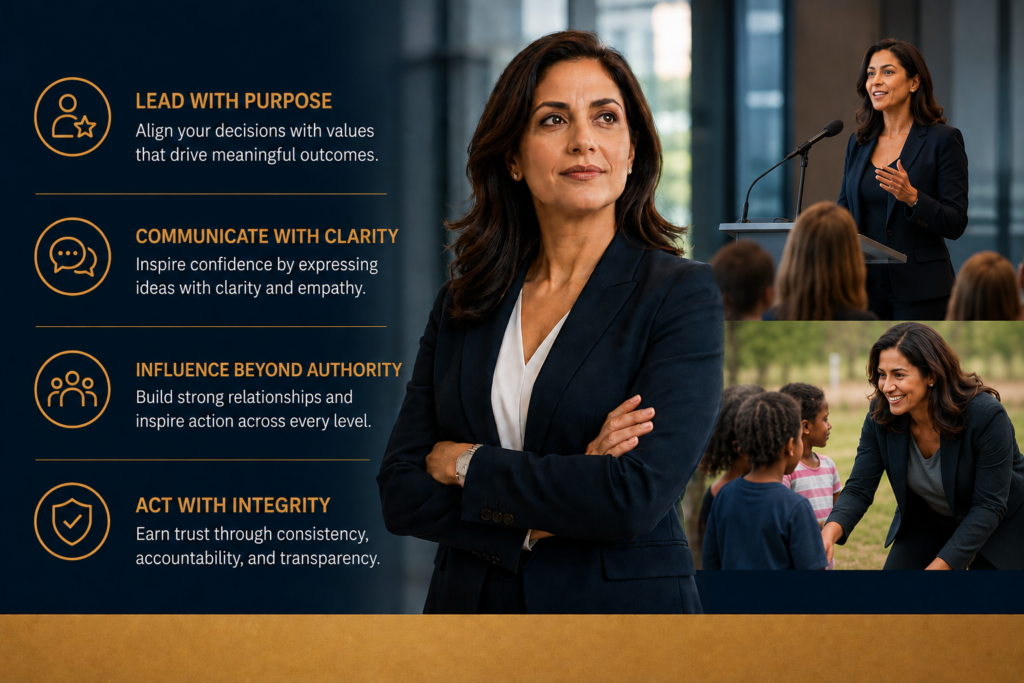

In today’s professional landscape, executive presence is no longer reserved for CEOs delivering keynote speeches or senior leaders commanding attention in corporate boardrooms. It has evolved into a critical skill for professionals at every level — influencing how individuals communicate, inspire trust, build relationships, and lead across both formal and informal environments.
The modern workplace is increasingly hybrid, collaborative, and fast-paced. In this reality, executive presence extends far beyond polished presentations and tailored suits. It appears in everyday interactions: how you respond under pressure, how you contribute during meetings, how you communicate online, and how consistently your actions align with your values.
What Is Executive Presence?
Executive presence is the ability to inspire confidence in others through a combination of communication, credibility, emotional intelligence, and authenticity. It is the quality that makes people listen when you speak and trust your judgment when decisions matter.
Traditionally, executive presence was associated with authority, confidence, and polished public speaking. While those elements still matter, today’s understanding is more nuanced. Modern executive presence includes empathy, adaptability, inclusiveness, and the ability to connect with diverse teams.
It is less about appearing powerful and more about creating impact.
Why Executive Presence Matters Everywhere
Many professionals assume executive presence becomes important only when pursuing leadership positions. In reality, it influences career growth from the very beginning.
Whether you are:
- Leading a project team,
- Managing client relationships,
- Participating in cross-functional collaboration,
- Networking professionally,
- Or representing your organization online,
your presence shapes how others perceive your competence and potential.
Strong executive presence can:
- Increase credibility,
- Improve influence,
- Strengthen workplace relationships,
- Enhance leadership opportunities,
- And help navigate challenging conversations effectively.
In a competitive environment where technical skills are often comparable, executive presence becomes a key differentiator.
The Three Pillars of Executive Presence
1. Communication
Communication remains the foundation of executive presence. However, effective communication is not about speaking the most — it is about communicating with clarity, confidence, and purpose.
Professionals with strong executive presence:
- Speak concisely,
- Listen actively,
- Ask thoughtful questions,
- Maintain composure during difficult discussions,
- And adapt their message to different audiences.
Digital communication also plays a major role today. Emails, virtual meetings, instant messaging, and social media interactions all contribute to professional perception. Tone, responsiveness, and clarity matter just as much online as they do in person.
2. Credibility
Credibility comes from consistency between words and actions. People trust professionals who demonstrate competence, reliability, and integrity over time.
Building credibility requires:
- Delivering on commitments,
- Owning mistakes,
- Demonstrating expertise,
- Staying calm under pressure,
- And making ethical decisions.
Executive presence is not built through self-promotion alone. It develops when others repeatedly experience your dependability and professionalism.
3. Connection
Perhaps the most overlooked aspect of executive presence is the ability to connect authentically with others.
Leadership today is increasingly relationship-driven. Employees, clients, and stakeholders value leaders who show empathy, emotional intelligence, and genuine interest in people.
Connection involves:
- Reading social dynamics,
- Understanding team morale,
- Encouraging collaboration,
- Respecting diverse perspectives,
- And creating psychological safety.
A leader who commands attention but fails to connect may gain compliance. A leader who connects authentically earns trust and long-term influence.
Executive Presence in the Hybrid Workplace
The shift toward remote and hybrid work has transformed how executive presence is perceived.
In virtual environments:
- Visibility requires intentionality,
- Communication must be clearer,
- And engagement becomes more difficult.
Professionals now need to project presence through screens, written communication, and asynchronous collaboration.
Simple habits can make a significant difference:
- Maintaining eye contact during video calls,
- Speaking with energy and clarity,
- Being fully present during meetings,
- Using concise written communication,
- And contributing meaningfully in digital discussions.
Executive presence today is increasingly measured by consistency across physical and digital spaces.
Authenticity Over Perfection
One of the biggest misconceptions about executive presence is that it requires perfection. In reality, authenticity often creates stronger influence than polished performance.
Modern leaders are expected to be human — not flawless.
Professionals who acknowledge challenges, communicate transparently, and remain grounded tend to build stronger trust than those who project constant certainty or authority.
Authenticity does not mean oversharing or abandoning professionalism. It means aligning your communication, behavior, and values in a way that feels genuine and consistent.
People are more likely to follow leaders they relate to.
Developing Executive Presence
Executive presence is not an innate trait reserved for a select few. It is a skill that can be developed intentionally over time.
Practical ways to strengthen executive presence include:
- Improving public speaking and storytelling skills,
- Practicing active listening,
- Seeking constructive feedback,
- Strengthening emotional intelligence,
- Expanding industry knowledge,
- Observing effective leaders,
- And developing greater self-awareness.
Equally important is learning to manage stress and maintain composure during uncertainty. Calmness under pressure often signals confidence and leadership maturity.
Beyond Titles and Hierarchies
Executive presence is no longer tied exclusively to senior titles or corner offices. Organizations increasingly value individuals who can influence positively, collaborate effectively, and lead with clarity regardless of formal authority.
The professionals who stand out today are not necessarily the loudest or most dominant. They are the ones who:
- Communicate with intention,
- Build trust consistently,
- Demonstrate emotional intelligence,
- And elevate the people around them.
Executive presence beyond the boardroom is ultimately about influence rooted in authenticity, competence, and connection. In a world where leadership happens everywhere — in meetings, online platforms, collaborative projects, and everyday interactions — presence is no longer optional. It is essential