
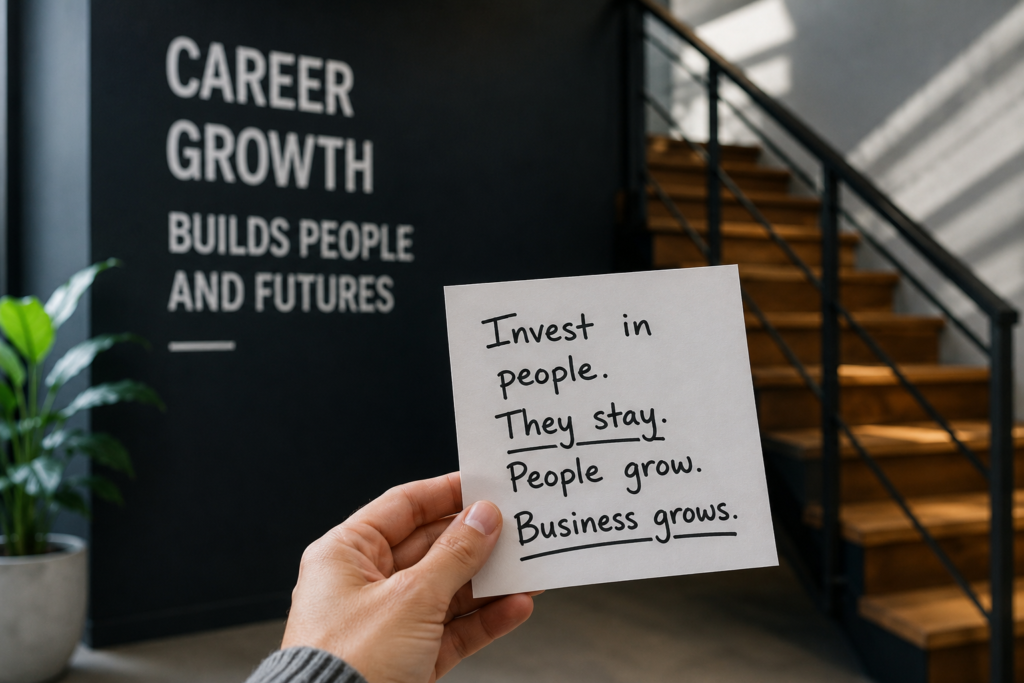

For decades, compensation has been the primary lever organizations used to attract and retain talent. Higher salaries, annual increments, bonuses, and financial incentives were considered the most effective ways to keep employees engaged and committed. However, the modern workforce is redefining what it values most from an employer.
Today, career growth, learning opportunities, and professional development are increasingly outweighing compensation as key factors influencing employee retention. While competitive pay remains important, organizations are discovering that employees are more likely to stay where they can envision a meaningful future rather than simply earn a higher paycheck.
The Shift in Employee Expectations
The workforce has undergone a significant transformation over the past few years. Employees are no longer evaluating opportunities solely through a financial lens. They are seeking roles that offer continuous learning, skill enhancement, leadership exposure, and clear pathways for advancement.
Research consistently shows that employees who feel stagnant in their careers are more likely to explore external opportunities, regardless of salary levels. Conversely, employees who see opportunities to grow often remain loyal even when competing offers promise marginally higher compensation.
This shift is particularly evident among younger professionals who prioritize career progression, mentorship, and purpose-driven work over short-term financial gains.
Why Compensation Alone Is Losing Its Impact
Compensation remains a hygiene factor—it can prevent dissatisfaction, but it rarely creates long-term engagement on its own.
Salary increases often provide temporary motivation. Employees quickly adjust to new compensation levels, and the initial satisfaction fades over time. If opportunities for learning and advancement are absent, higher pay alone may not be enough to prevent attrition.
Moreover, in highly competitive industries, organizations frequently find themselves engaged in bidding wars for talent. This approach can become unsustainable, driving up labor costs without necessarily improving retention outcomes.
As a result, many organizations are shifting their focus from “How much should we pay?” to “How can we help employees grow?”
Career Growth as a Strategic Retention Driver
Employees want to know that their current role is part of a larger professional journey. When organizations provide clear career pathways, employees gain confidence that they can achieve their ambitions without changing employers.
Career growth encompasses several dimensions:
- Opportunities for internal mobility
- Leadership development programs
- Cross-functional assignments
- Upskilling and reskilling initiatives
- Mentorship and coaching
- Exposure to strategic projects
- Transparent promotion frameworks
When these elements are embedded into the employee experience, retention naturally improves because employees perceive long-term value in staying.
The Rise of Internal Talent Mobility
One of the most powerful retention strategies emerging today is internal talent mobility.
Rather than losing employees to external opportunities, leading organizations are creating systems that help employees discover new roles, projects, and career paths within the company itself.
Internal mobility benefits both employees and employers. Employees gain fresh challenges and growth opportunities, while organizations retain institutional knowledge and reduce hiring costs.
Many companies are investing in internal talent marketplaces that connect employees with projects, stretch assignments, and open positions based on their skills and aspirations. These platforms are transforming career development from an annual conversation into an ongoing process.
Learning and Development as a Competitive Advantage
Continuous learning has become a cornerstone of employee retention.
Rapid technological change means that skills have shorter lifespans than ever before. Employees understand that their future employability depends on ongoing development, making learning opportunities a critical factor in employer choice.
Organizations that invest in training, certifications, leadership programs, and digital learning platforms send a powerful message: “We are invested in your future.”
This commitment builds trust and strengthens employee loyalty while simultaneously creating a more adaptable workforce.
Managers Play a Critical Role
Career growth is not driven solely by HR initiatives. Managers are often the most influential factor in an employee’s development experience.
Employees expect managers to act as career coaches rather than merely performance evaluators. Effective managers help team members identify growth opportunities, develop new capabilities, and prepare for future roles.
Organizations that equip managers with coaching skills often see higher engagement levels and lower turnover rates because employees feel supported in achieving their professional goals.
The Business Impact of Growth-Centered Retention
When career development becomes a retention strategy, organizations benefit in multiple ways:
- Reduced voluntary attrition
- Lower recruitment and onboarding costs
- Higher employee engagement
- Stronger leadership pipelines
- Improved workforce agility
- Enhanced employer branding
- Greater organizational resilience
Most importantly, organizations create a culture where employees view long-term careers as achievable within the company rather than elsewhere.
Looking Ahead
The future of retention is not about choosing between compensation and career growth—it is about recognizing that compensation gets talent through the door, while growth convinces them to stay.
As workforce expectations continue to evolve, organizations that prioritize career development, internal mobility, and continuous learning will gain a significant advantage in attracting and retaining top talent.
In an era where skilled professionals have more choices than ever, the most effective retention strategy may no longer be offering a bigger paycheck. It may be offering a bigger future.