
The modern workplace is experiencing one of the most significant shifts in its history. For the first time, organizations may have up to four or even five generations working side by side. From experienced professionals who have decades of institutional knowledge to younger employees bringing fresh perspectives and digital-first thinking, today’s workforce has become increasingly diverse in age, experiences, communication styles, and expectations.
Managing a multi-generational workforce is no longer just an HR challenge; it has become a leadership capability. The organizations that succeed are not the ones that prioritize one generation over another, but those that create environments where different generations can collaborate, learn, and grow together.
Understanding the Multi-Generational Workforce
Today’s workforce commonly includes:
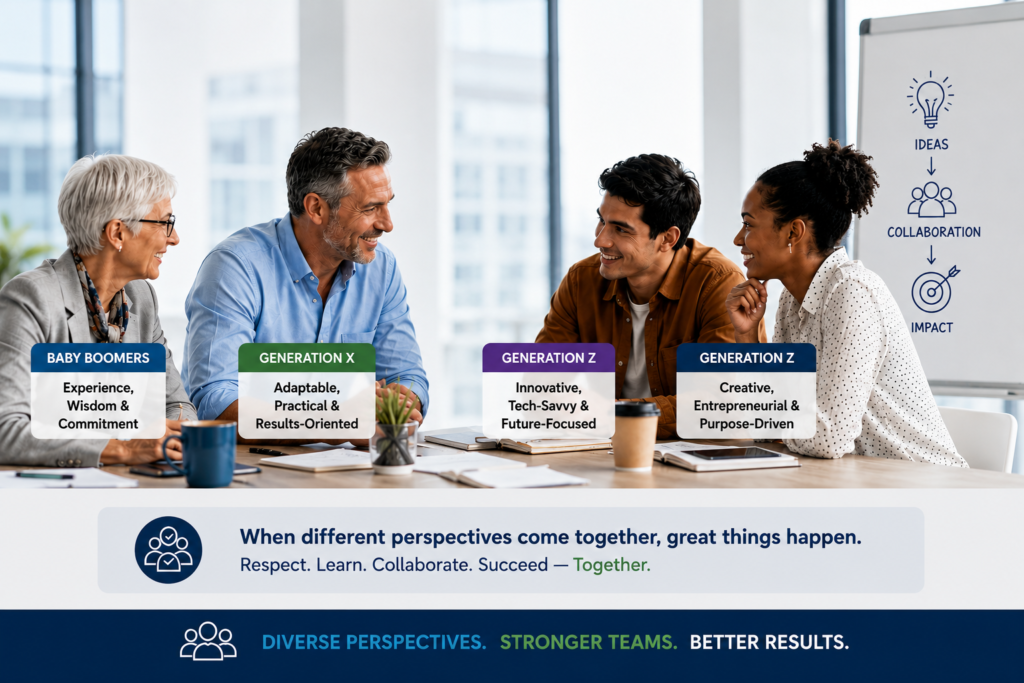
Traditionalists and Baby Boomers
- Deep organizational experience
- Strong work ethic and loyalty
- Preference for structure and relationship-driven communication
Generation X
- Independent and adaptable
- Strong focus on results and work-life balance
- Comfortable with both traditional and digital approaches
Millennials
- Purpose-driven and collaborative
- Seek continuous learning and feedback
- Value flexibility and career growth opportunities
Generation Z
- Digital-native mindset
- Highly innovative and entrepreneurial
- Prefer speed, transparency, and meaningful work
Each generation enters the workplace with different experiences shaped by technology, economic conditions, and social changes. Differences are natural; challenges arise when leaders assume one style fits everyone.
Common Leadership Challenges in Multi-Generational Teams
Communication Gaps
Some employees prefer face-to-face discussions, while others rely on instant messaging or collaborative digital platforms.
Different Work Expectations
Older generations may value job stability and traditional career paths, whereas younger employees often seek flexibility and faster growth opportunities.
Resistance to Change
Younger teams may embrace rapid transformation, while experienced employees may prefer tested methods and gradual transitions.
Varying Motivational Drivers
Not everyone is motivated by the same factors. Recognition, purpose, financial rewards, learning opportunities, and autonomy can have different levels of importance across generations.
Strategies for Leading Multi-Generational Teams Successfully
1. Focus on Individuals Rather Than Stereotypes
One of the biggest leadership mistakes is assuming every person within a generation thinks the same way. Age may influence preferences, but individual personality, experience, and career goals matter more.
Effective leaders avoid labels and understand employees as individuals.
2. Encourage Two-Way Mentorship
Learning should flow in both directions.
Senior employees bring:
- Industry expertise
- Leadership experience
- Business judgment
Younger employees contribute:
- Digital skills
- Emerging market insights
- New approaches and innovation
Reverse mentoring programs often create stronger relationships and break down generational barriers.
3. Build Flexible Work Practices
Flexibility has become a competitive advantage.
Leaders can provide:
- Hybrid work options
- Flexible schedules
- Multiple communication channels
- Personalized growth opportunities
Flexibility creates an environment where people across generations can perform at their best.
4. Create Shared Purpose
Different generations may work differently, but most people want to feel connected to meaningful outcomes.
Strong leaders consistently communicate:
- Organizational vision
- Team goals
- Individual impact
- Long-term purpose
Purpose becomes the common ground that unites diverse teams.
5. Promote Inclusive Communication
Leaders should create communication strategies that work for everyone.
Examples include:
- Combining digital tools with personal interaction
- Encouraging open feedback
- Maintaining transparency
- Respecting different communication preferences
When communication improves, collaboration naturally follows.
What Great Leaders Understand
Successful leadership in a multi-generational workforce is not about managing age differences; it is about leveraging diverse strengths.
Experience provides wisdom.
Innovation drives progress.
Collaboration creates impact.
The future of leadership belongs to those who can bring together multiple perspectives and turn diversity into organizational strength.
Conclusion
Leading multi-generational teams successfully requires adaptability, empathy, and a people-first mindset. Organizations that create cultures of respect, learning, and inclusion will not only improve employee engagement but also strengthen innovation and long-term business performance.
The strongest teams are not built by making everyone think alike. They are built by helping different people succeed together.