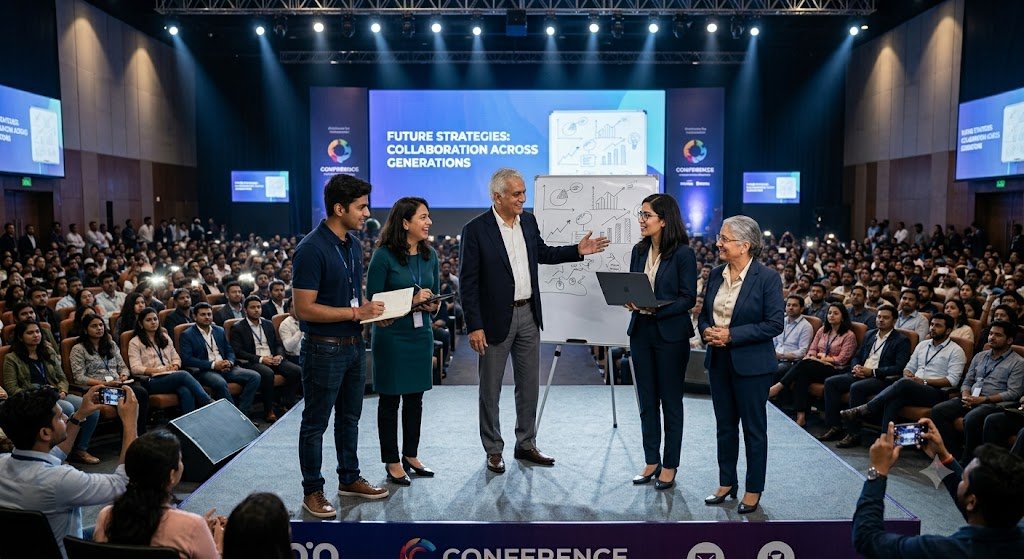

Today’s workplace is more diverse than ever—not only in terms of culture, skills, and experiences but also in age. For the first time in history, many organizations have employees from four generations working side by side, each bringing unique perspectives, work styles, and expectations. From seasoned professionals with decades of institutional knowledge to digital-native employees driving innovation, this diversity presents both opportunities and challenges for leaders.
Organizations that successfully lead a multi-generational workforce don’t attempt to make everyone work the same way. Instead, they create environments where different generations collaborate, learn from one another, and contribute toward shared goals.
Understanding the Four Generations in Today’s Workforce
Although individual preferences vary, each generation has been shaped by different economic, technological, and social experiences.
Baby Boomers (Born 1946–1964) often value loyalty, experience, stability, and face-to-face communication. Many continue to hold leadership positions and provide invaluable institutional knowledge.
Generation X (Born 1965–1980) is known for independence, adaptability, and pragmatism. Having witnessed major technological transitions, Gen X often serves as the bridge between traditional and modern workplace practices.
Millennials (Born 1981–1996) prioritize purpose, collaboration, continuous learning, and career development. They value flexibility and expect organizations to invest in their growth.
Generation Z (Born 1997–2012) has entered the workforce with strong digital skills, entrepreneurial thinking, and expectations for inclusion, flexibility, and rapid feedback. They are comfortable with technology and seek meaningful work from the outset.
While these characteristics offer useful insights, effective leaders avoid stereotypes and recognize each employee as an individual.
Why Multi-Generational Teams Are a Competitive Advantage
Age diversity brings together different perspectives that strengthen decision-making, innovation, and problem-solving.
Experienced employees contribute strategic thinking, industry expertise, and long-term business understanding. Younger professionals often introduce fresh ideas, digital capabilities, and new approaches to customer engagement.
When organizations encourage collaboration across generations, they benefit from:
- Better innovation through diverse perspectives
- Stronger knowledge transfer
- Improved customer understanding across age groups
- Greater organizational resilience
- Enhanced mentoring and leadership development
The challenge lies not in managing differences but in leveraging them effectively.
Communication Is the Foundation
One of the biggest sources of generational misunderstanding is communication.
Some employees prefer formal meetings and emails, while others are comfortable with instant messaging, collaborative platforms, or video calls. Leaders who insist on a single communication style risk reducing engagement.
Instead, organizations should build communication strategies that are:
- Clear and transparent
- Accessible across multiple platforms
- Consistent in messaging
- Flexible enough to accommodate different preferences
The goal is clarity rather than conformity.
Leadership Must Be Flexible, Not Uniform
The era of one-size-fits-all leadership is over.
Different employees are motivated by different factors. Some value stability and recognition for long-term contributions. Others seek career mobility, learning opportunities, autonomy, or work-life integration.
Effective leaders understand these differences without creating unequal treatment.
Modern leadership focuses on:
- Individual career conversations
- Personalized development plans
- Flexible work arrangements where appropriate
- Recognition tailored to employee preferences
- Continuous coaching rather than annual reviews
Leadership today is increasingly about adapting to people rather than expecting people to adapt entirely to leadership.
Reverse Mentoring Is Reshaping Organizations
Traditional mentoring typically involves senior leaders guiding younger employees. Increasingly, organizations are embracing reverse mentoring, where younger professionals share expertise in areas such as:
- Artificial Intelligence
- Social media
- Emerging technologies
- Digital collaboration
- Customer behavior
- New workplace trends
Meanwhile, experienced leaders provide strategic thinking, leadership skills, business judgment, and organizational knowledge.
This two-way exchange builds stronger relationships while breaking down generational barriers.
Learning Should Be Continuous for Everyone
Learning is no longer reserved for early-career employees.
Rapid technological change means every generation must continuously update skills.
Organizations should offer learning experiences that include:
- Self-paced digital learning
- Instructor-led workshops
- Peer learning sessions
- Cross-functional projects
- Leadership coaching
- Microlearning modules
Employees should be encouraged to become both learners and teachers throughout their careers.
Flexibility Means Different Things to Different People
Flexible work has become a major workplace expectation, but flexibility isn’t defined the same way across generations.
Some employees prioritize remote work and flexible schedules.
Others value predictable routines, in-office collaboration, or reduced travel.
The most successful organizations move beyond blanket policies and instead focus on flexibility that supports both business needs and employee performance.
The emphasis shifts from where work happens to how effectively outcomes are delivered.
Building an Inclusive Workplace Across Generations
Inclusion extends beyond race, gender, or culture—it also includes age.
Organizations should actively challenge assumptions such as:
- Younger employees lack commitment.
- Older employees resist technology.
- Experience automatically outweighs fresh ideas.
- Innovation only comes from younger talent.
These stereotypes can limit collaboration and create unnecessary workplace friction.
Inclusive cultures recognize that innovation and experience are complementary, not competing strengths.
Technology Should Connect, Not Divide
Digital transformation often exposes generational differences in technology adoption.
Rather than assuming varying levels of comfort, organizations should provide:
- User-friendly digital tools
- Comprehensive training
- Ongoing technical support
- Opportunities for peer learning
- Clear explanations of business value
Successful digital transformation focuses as much on people as it does on technology.
The Future of Leadership Is Generationally Intelligent
As life expectancy increases and retirement patterns evolve, organizations may soon see five generations working together.
Future-ready leaders will need to develop generational intelligence—the ability to understand diverse perspectives, adapt leadership styles, and create environments where every employee can succeed.
This means leading with curiosity instead of assumptions, encouraging collaboration instead of competition, and focusing on shared organizational goals rather than generational labels.
Companies that master multi-generational leadership will build stronger talent pipelines, improve innovation, retain valuable knowledge, and create cultures where employees of every age feel respected and empowered.