
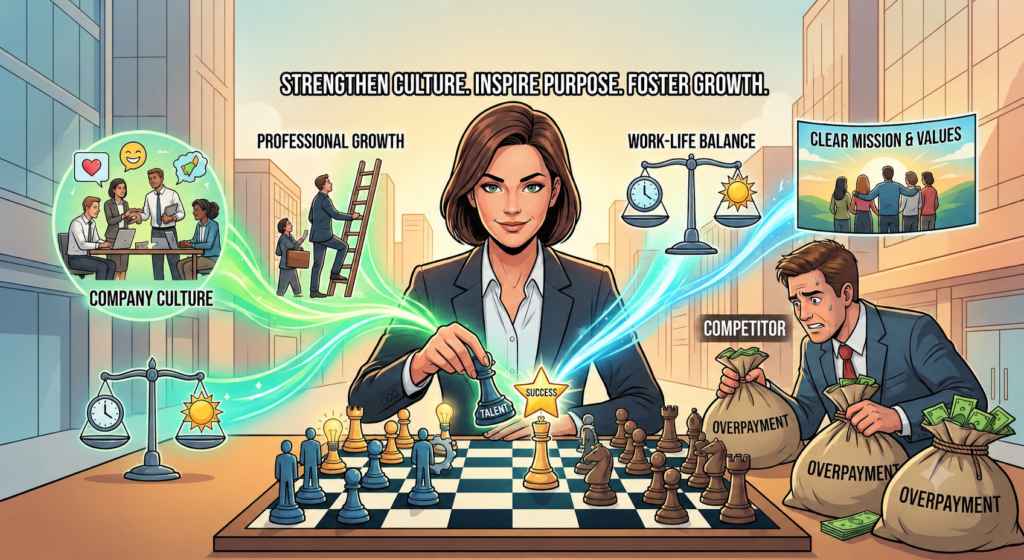

In today’s competitive hiring landscape, attracting top talent has become one of the biggest challenges for business leaders. As demand for skilled professionals continues to outpace supply in areas such as AI, cybersecurity, cloud computing, data analytics, and digital transformation, many organizations have responded by offering increasingly higher salaries. While competitive compensation remains important, relying solely on bigger paychecks is neither sustainable nor sufficient.
The companies consistently winning the talent war are not necessarily the ones paying the highest salaries. Instead, they are building workplaces where people see opportunities to grow, contribute meaningfully, and thrive over the long term. Winning talent today requires a strategic combination of employer branding, employee experience, career development, flexibility, and leadership.
Why Higher Salaries Alone Don’t Solve Hiring Challenges
Offering premium salaries may attract candidates initially, but it doesn’t guarantee engagement or retention. Employees who switch jobs primarily for higher pay are often willing to leave again when another offer comes along.
Constantly increasing compensation also creates challenges such as:
- Rising recruitment costs
- Internal pay inequities
- Lower profitability
- Salary inflation across teams
- Unsustainable long-term hiring strategies
Organizations that depend exclusively on compensation often find themselves trapped in an endless bidding war.
Build an Employer Brand People Want to Join
Today’s professionals research companies before applying. They want to understand the culture, leadership, career opportunities, values, and employee experiences.
A strong employer brand should communicate:
- Clear organizational purpose
- Inclusive workplace culture
- Growth opportunities
- Employee success stories
- Leadership transparency
- Commitment to innovation
Companies with authentic employer brands often receive higher-quality applications even when their salary packages are similar to competitors.
Career Growth Is the New Currency
Many professionals—especially younger generations—prioritize learning over immediate financial gains. Employees want confidence that joining an organization will accelerate their careers.
Businesses can create this value through:
- Structured career paths
- Internal mobility programs
- Leadership development
- Mentorship initiatives
- Professional certifications
- Cross-functional projects
When employees believe they can continuously develop their skills, they become less likely to leave for marginal salary increases elsewhere.
Invest in Great Managers
Employees frequently leave managers rather than companies. Strong leadership significantly influences engagement, productivity, and retention.
Effective managers:
- Provide regular feedback
- Recognize achievements
- Support career aspirations
- Build psychological safety
- Encourage innovation
- Communicate transparently
Organizations that develop exceptional people managers often retain talent more effectively than companies focused only on compensation.
Offer Flexibility That Employees Value
Flexible work arrangements have become a major differentiator in today’s employment market.
Flexibility may include:
- Hybrid work models
- Remote work opportunities
- Flexible schedules
- Results-oriented performance management
- Wellness programs
- Additional leave policies
For many professionals, greater autonomy can outweigh modest differences in salary.
Create a High-Performance Culture
Top performers seek environments where they can make an impact. They are motivated by challenging work, collaboration, innovation, and recognition.
Organizations should focus on:
- Clear goals and accountability
- Recognition programs
- Faster decision-making
- Collaborative teams
- Empowered employees
- Meaningful projects
People stay where they feel valued and where their work contributes to business success.
Leverage Internal Talent Before Hiring Externally
Hiring externally is often more expensive than developing existing employees. Organizations should maximize internal talent by identifying employees with the potential to grow into new roles.
Strategies include:
- Internal job marketplaces
- Skills-based workforce planning
- Reskilling initiatives
- Succession planning
- Job rotations
- Stretch assignments
Promoting from within not only reduces hiring costs but also strengthens employee loyalty.
Improve the Candidate Experience
Candidates often judge an organization long before receiving an offer. A poor hiring experience can drive away exceptional talent regardless of salary.
Best practices include:
- Faster interview processes
- Clear communication
- Transparent expectations
- Timely feedback
- Respect for candidates’ time
- Smooth onboarding
An efficient recruitment process demonstrates organizational professionalism and respect.
Recognize Employees Beyond Compensation
Recognition is one of the most cost-effective retention tools available.
Organizations can reward employees through:
- Public appreciation
- Performance awards
- Learning opportunities
- Leadership visibility
- Innovation recognition
- Additional responsibilities
Employees who feel appreciated are more engaged and less likely to seek external opportunities.
Adopt Skills-Based Hiring
Traditional hiring often filters candidates based on degrees or years of experience. Skills-based hiring expands the talent pool while reducing competition for a limited number of candidates.
Businesses should evaluate:
- Demonstrated capabilities
- Problem-solving skills
- Learning agility
- Adaptability
- Cultural contribution
- Potential for growth
This approach enables organizations to discover high-potential talent that competitors may overlook.
Technology Can Improve Hiring Efficiency
AI-powered recruitment platforms help organizations identify qualified candidates more quickly, reduce bias, automate repetitive tasks, and improve hiring decisions.
Technology can support:
- Resume screening
- Skills assessments
- Interview scheduling
- Candidate engagement
- Predictive hiring analytics
- Workforce planning
The result is faster hiring with lower recruitment costs and better candidate experiences.
Winning the Talent War Is About Value, Not Just Salary
Compensation will always play an important role in attracting talent, but it is no longer the only deciding factor. Professionals increasingly seek employers that offer meaningful work, continuous learning, supportive leadership, flexibility, recognition, and opportunities to grow.
Organizations that create compelling employee experiences can attract and retain exceptional talent without entering unsustainable salary battles. The future belongs to companies that compete on culture, purpose, development, and trust—not just pay.