
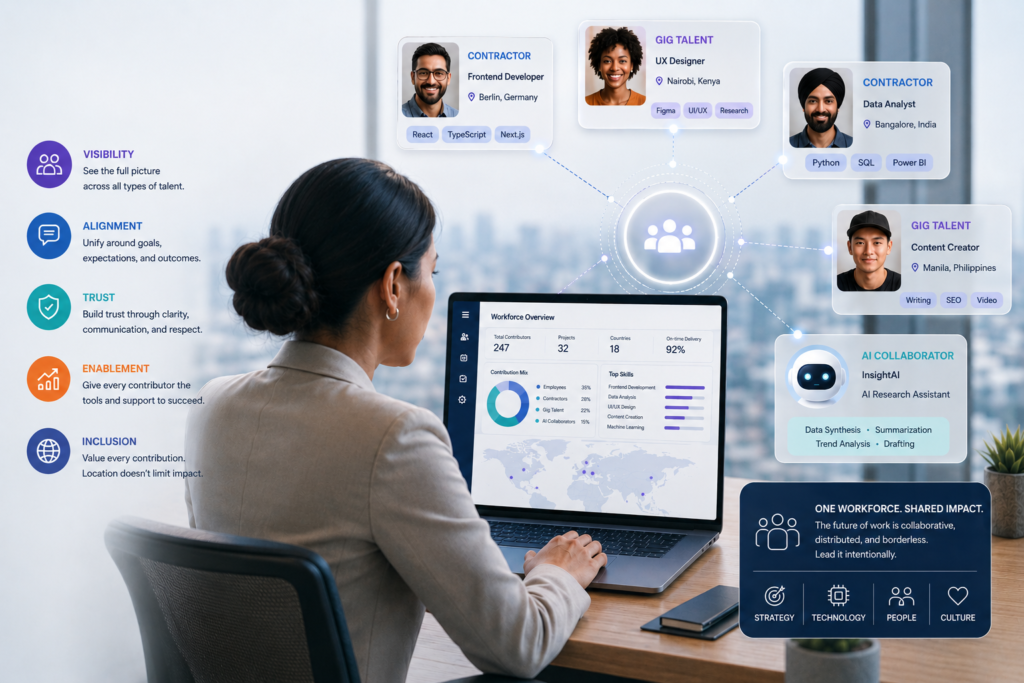

For decades, the workforce was easy to define—employees who came to the office, worked under a manager, and followed a clear organizational structure. Today, that definition is rapidly evolving. Modern organizations are increasingly powered by an “invisible workforce” made up of contractors, freelancers, gig professionals, and AI collaborators that operate beyond the traditional employee framework.
This shift is transforming how businesses access skills, drive innovation, and scale operations. The future of workforce management is no longer just about managing people—it is about managing a dynamic ecosystem of human and digital talent.
The Rise of the Extended Workforce
Organizations today rely on a broader talent network than ever before. Gig workers and independent contractors bring specialized expertise, flexibility, and speed, allowing companies to adapt quickly to changing business needs. Whether it is technology development, creative projects, data analysis, or consulting, external talent has become a strategic advantage rather than a temporary solution.
At the same time, AI agents and intelligent automation tools are emerging as digital teammates. They assist with repetitive tasks, provide insights, support decision-making, and enhance productivity across functions such as HR, finance, procurement, and customer service.
A New Challenge for Leaders and HR
Managing this invisible workforce requires a new mindset. Traditional workforce strategies focused on hiring, engagement, and performance management for full-time employees. The new model demands visibility across all contributors—employees, contractors, gig workers, and AI systems.
Leaders must answer critical questions:
- Do we have a clear view of all the skills available inside and outside our organization?
- How do we maintain collaboration between permanent employees and external contributors?
- How do we measure the performance and impact of AI collaborators?
- How do we ensure security, compliance, and ethical use of AI?
The ability to orchestrate this diverse workforce will become a key leadership capability.
Building an Integrated Talent Ecosystem
Forward-thinking companies are moving toward a “workforce ecosystem” approach where the right work is assigned to the right resource—human or AI. This requires investment in talent marketplaces, AI governance frameworks, collaboration tools, and new management practices.
Managers will need to shift from supervising employees to coordinating networks of talent. Success will depend on clear objectives, strong communication, inclusive culture, and the ability to seamlessly integrate different types of contributors.
The Future: Managing Work, Not Workers
The most successful organizations of the future will not be those with the largest employee base, but those that can effectively combine internal talent, external expertise, and AI capabilities.
The invisible workforce is no longer on the sidelines—it is becoming a core driver of business growth. The leaders who learn to manage this new reality will gain greater agility, innovation, and competitive advantage in the age of intelligent work.