
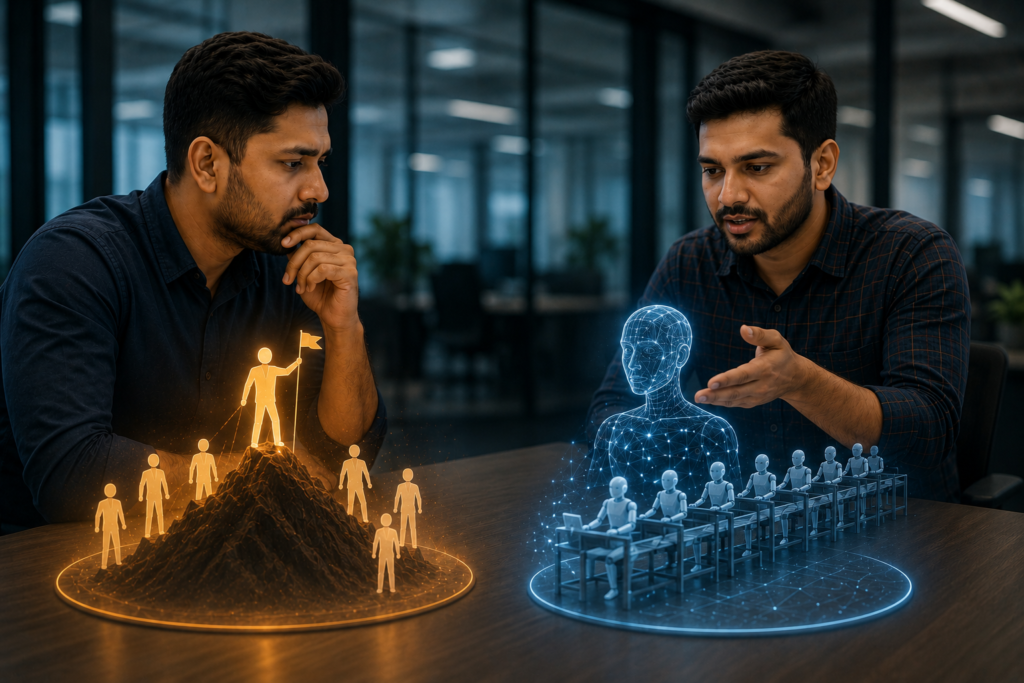

Artificial Intelligence is transforming the way businesses operate. From automating workflows and improving customer experiences to predicting market trends and accelerating decision-making, AI is becoming a core part of modern enterprises. Companies across industries are investing heavily in AI-driven technologies to improve efficiency, reduce costs, and stay competitive.
But even as AI becomes more powerful, one truth remains unchanged: businesses still need strong human leadership.
Technology can process data, but it cannot replace human judgment, emotional intelligence, creativity, ethics, and vision. The companies that will truly succeed in the AI era are not the ones that rely only on automation — they are the ones that combine AI capabilities with human leadership.
AI Can Analyze Data, But Leaders Create Vision
AI is excellent at identifying patterns, generating insights, and optimizing processes. It can tell businesses what is happening and sometimes even predict what might happen next.
However, AI cannot define a company’s purpose, culture, or long-term vision.
Great leaders make strategic decisions based not only on numbers but also on experience, intuition, market understanding, and human values. During uncertainty or transformation, employees look toward leaders for direction, confidence, and inspiration — something no algorithm can provide.
Human leadership gives meaning to technology.
Emotional Intelligence Still Matters
One of the biggest limitations of AI is the absence of emotional intelligence.
Leadership is not just about managing operations; it is about understanding people. Employees need empathy, motivation, trust, and communication, especially during periods of rapid technological change.
When organizations adopt AI, employees often face concerns about:
- Job security
- Changing roles
- Skill gaps
- Workplace uncertainty
Strong leaders help teams navigate these changes with transparency and confidence. They create environments where technology becomes an enabler rather than a threat.
In the future workplace, emotional intelligence may become even more valuable than technical expertise.
Ethical Decisions Require Human Judgment
AI systems are only as good as the data and instructions they receive. Without responsible leadership, AI can create risks related to:
- Bias and discrimination
- Privacy concerns
- Security threats
- Lack of accountability
- Unethical automation
Human leaders are essential for ensuring AI is used responsibly and ethically. CXOs and business leaders must create governance frameworks that balance innovation with trust and accountability.
Customers and employees will continue to trust organizations that prioritize human values alongside technological advancement.
Innovation Comes From Human Creativity
AI can generate content, automate coding, and improve efficiency, but true innovation still starts with human imagination.
Some of the world’s greatest business breakthroughs came from:
- Visionary thinking
- Risk-taking
- Curiosity
- Collaboration
- Understanding human behavior
AI supports innovation, but people drive it.
Leaders who encourage creativity, experimentation, and cross-functional collaboration will unlock the full potential of AI within their organizations.
The Future Belongs to Human + AI Collaboration
The conversation should not be “AI versus humans.” The real opportunity lies in collaboration.
Future-ready companies will:
- Use AI for efficiency and data-driven insights
- Empower employees with new tools and skills
- Invest in leadership development
- Build adaptable and resilient cultures
- Focus on both technology and human connection
The most successful organizations will be those where technology enhances human potential instead of replacing it.
Final Thoughts
AI is undoubtedly reshaping the business world, but leadership remains deeply human. While machines can automate tasks and process information at scale, they cannot replace empathy, vision, ethics, or the ability to inspire people.
As companies continue investing in AI, they must invest equally in leadership, culture, and human capability.
Because in the age of artificial intelligence, human leadership is not becoming less important — it is becoming more important than ever.